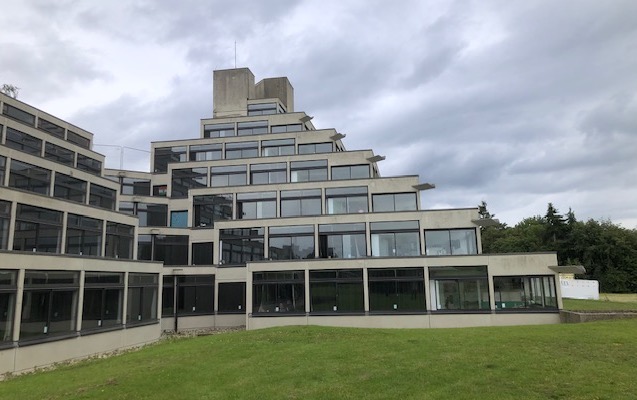
Reading recent reports on student loans not covering the actual cost of living really hit home with me as it brought back memories of my own student days. With Christmas approaching, I distinctly remember the time I was not able to attend the xmas party in my student halls because my flatmates had asked for a £10 contribution to buy food and drink. The budget for my weekly grocery shop in Tesco’s was about £5 at the time. It was possible to exist on that in the late 90s, but it didn’t leave much wiggle room if there was an unexpected expense. I also remember a time when my bank account was empty and I only had a couple of pounds left in my purse, with five more days of the month to go. Needless to say, I spent the evening of the xmas party in the computer lab, sneaking back into my halls when I expected it all to be over.
Even at the time, rent was eating up most of my student loan, with much of the remainder being spent on course materials, leaving me very little money for clothes, food and other miscellaneous expenses. Granted, my situation was slightly different as a then visiting student to the UK, as I received a small student loan from the German government, which was later replaced by various German scholarships and UK university funding. But with the cost of living being so much higher than in Germany at the time, it was never quite enough to live comfortably.
I remember the embarassement when a friend pointed out to me that my clothes looked worn out, when I couldn’t afford to replace the shoes with the holes in them, when my landlady chided me for not going out, or when I wasn’t able to join a weekend trip.
Socialising at uni generally became an issue. When I became a post-grad I started to attend conferences and seminars, and there would inevitably be a dinner with the speaker after the event. But it soon became clear to me that my strategy of ordering the cheapest dish – usually a soup – and a glass of tap water didn’t work out when the dinner party decided to go Dutch in the end and I would still have to pay in the region £30 because they all decided to have starters and several bottles of wine. So I stopped going.
Needless to say these things can affect your academic career if you’re not around when other people do their networking. Even if you go along and then stand out as the cheapskate, you’re more likely to leave a negative impression because the people around you might not reaslise what’s going on. After all, if you’re doing a PhD you must be middle class, right?
Throughout my studies, I always had part-time jobs to the extent that I can hardly remember a time when I was just able to focus on my various degrees. I worked as a freelance journalist, babysitter, census enumerator, office temp, breakfast assistant at a local old people’s home, supply teacher, researcher and associate tutor at the University. I also volunteered at the local independent cinema where they paid you in free tickets, so I would occasionally get to do some fun stuff. They were all great jobs, in which I met a lot of wonderful people and learnt some valuable life lessons I wouldn’t want to miss. But they didn’t help much with my studies, and the strain of working alongside my studies coupled with all the other problems this brought took a serious toll on my mental health.
I’m not asking for your pity. I’m doing well now with part-time jobs in academia and journalism, which I both enjoy very much. In many ways I’m doing exactly what I always wanted to do, and I have a decent standard of living. But I also know that my life might have been a lot easier or taken quite a different turn, if I had been able to focus more on my studies, attend conferences and seminars, including dinners, or just generally had had more time to relax and socialise, to travel, party and explore – basically do all the things that students are supposed to do. Maybe that sort of mythical student life still exists somewhere for some people. But judging from the news, it is becoming increasingly rare.
gm

 The History Woman's Blog
please change e-mail to redelinghuysjean6@gmail.com