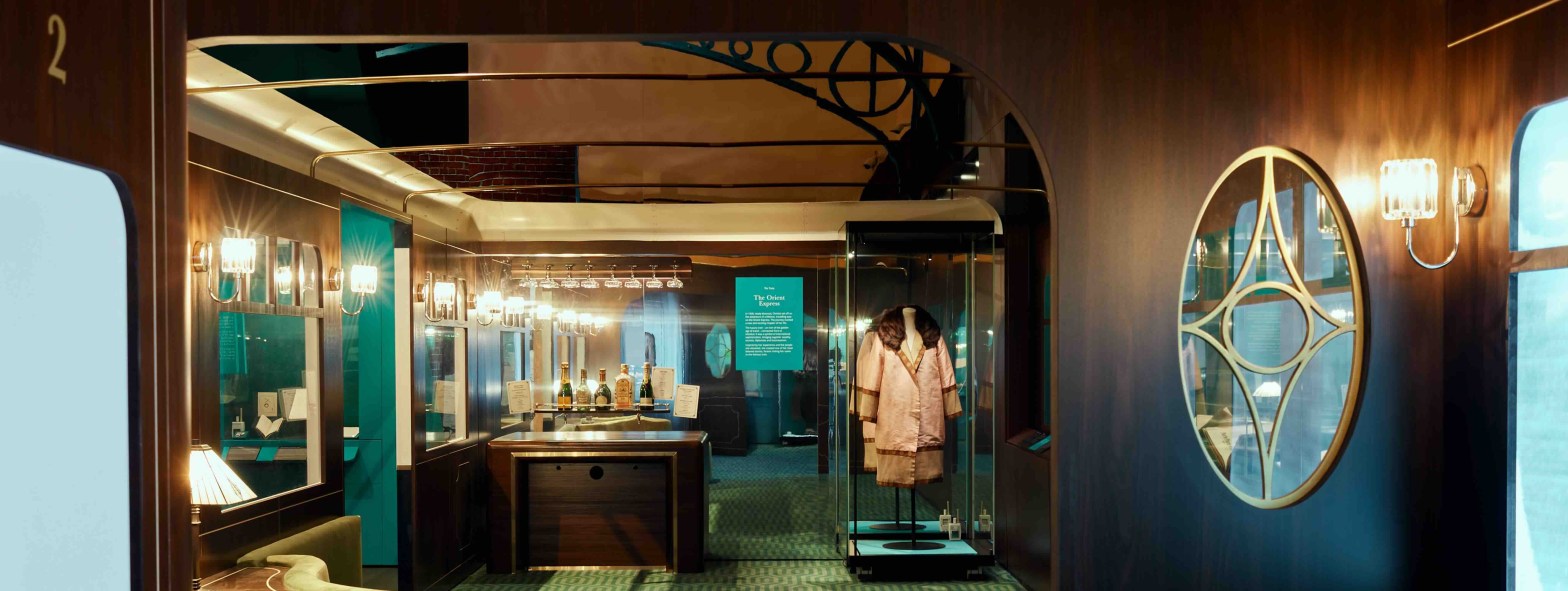
I went to see Agatha Christie: A World of Mystery at the British Library this week with some apprehension. When you really care about a subject, you are always worried that someone might ruin it for you. I was sceptical when I approached the picture-perfect display. The curators had gone for a themed-room approach, representing different places associated with the much-loved crime writer: The Country House, The Dispensary, The Train, The Dig and The Theatre. And for those for whom five rooms were not enough, there was even a little puzzle – you’ve guessed it – with a crime to solve.
Film props and books
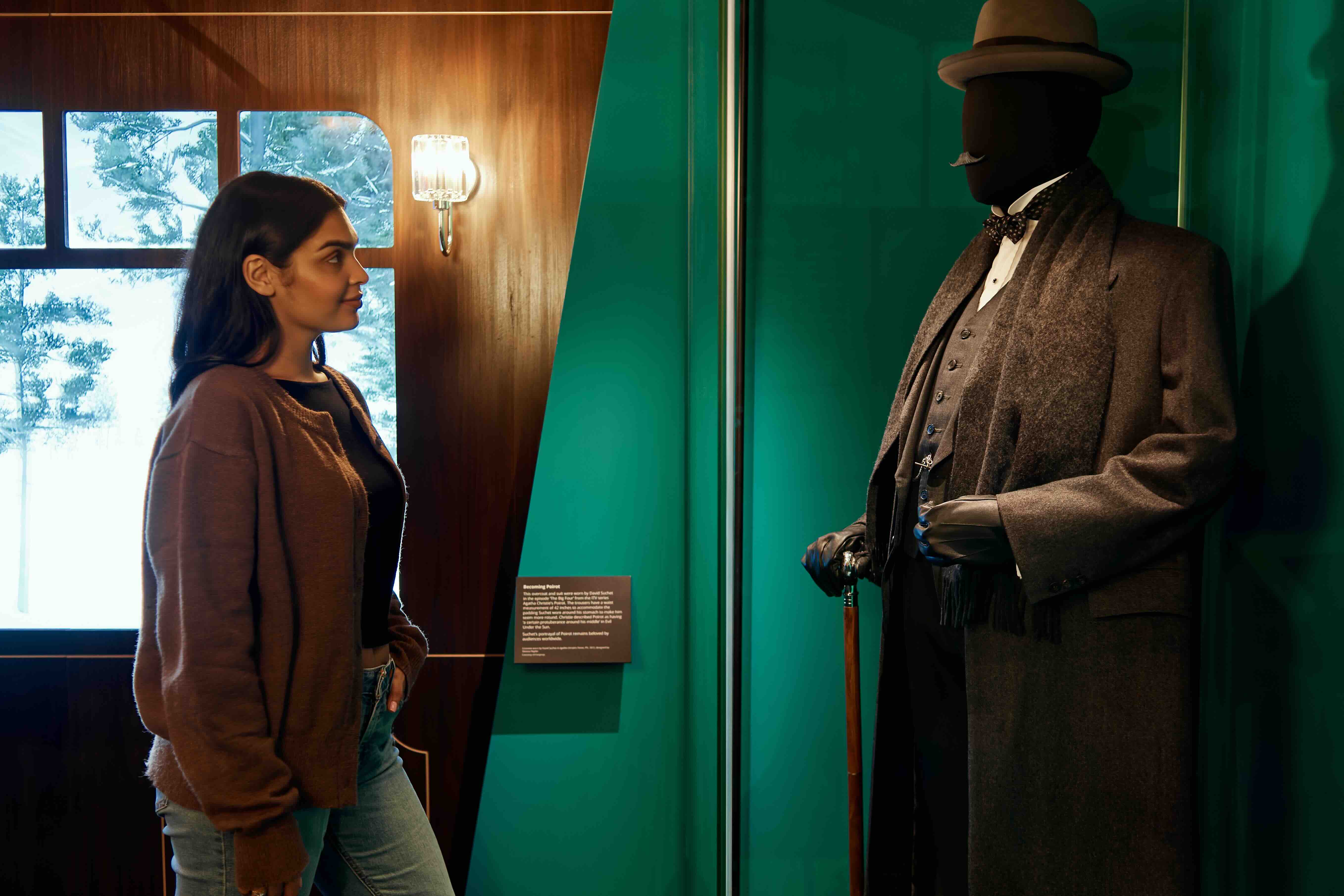
loan from Cosprop. On display at Agatha Christie:
A World of Mystery. Photo by Justine Trickett. ©
British Library Board
Admittedly, the exhibition is clearly geared towards those who know Christie from film and television as much as it is towards those who love her books. Some of the items on display look like props on a film set, and some of them are props from film and television productions, including the ten figures displayed on the table in a recent production of And Then There Were None. There are outfits worn by Joan Hickson as Miss Marple and by David Suchet as Hercule Poirot, and scenes from a range of different films and TV series are shown on little screens alongside the exhibits.
Described on the British Library’s website as “A major exhibition on the woman behind the books”, however, the show also succeeds in bringing out some of the lesser-known facts about Agatha Christie herself.
Country Houses are not just for murders
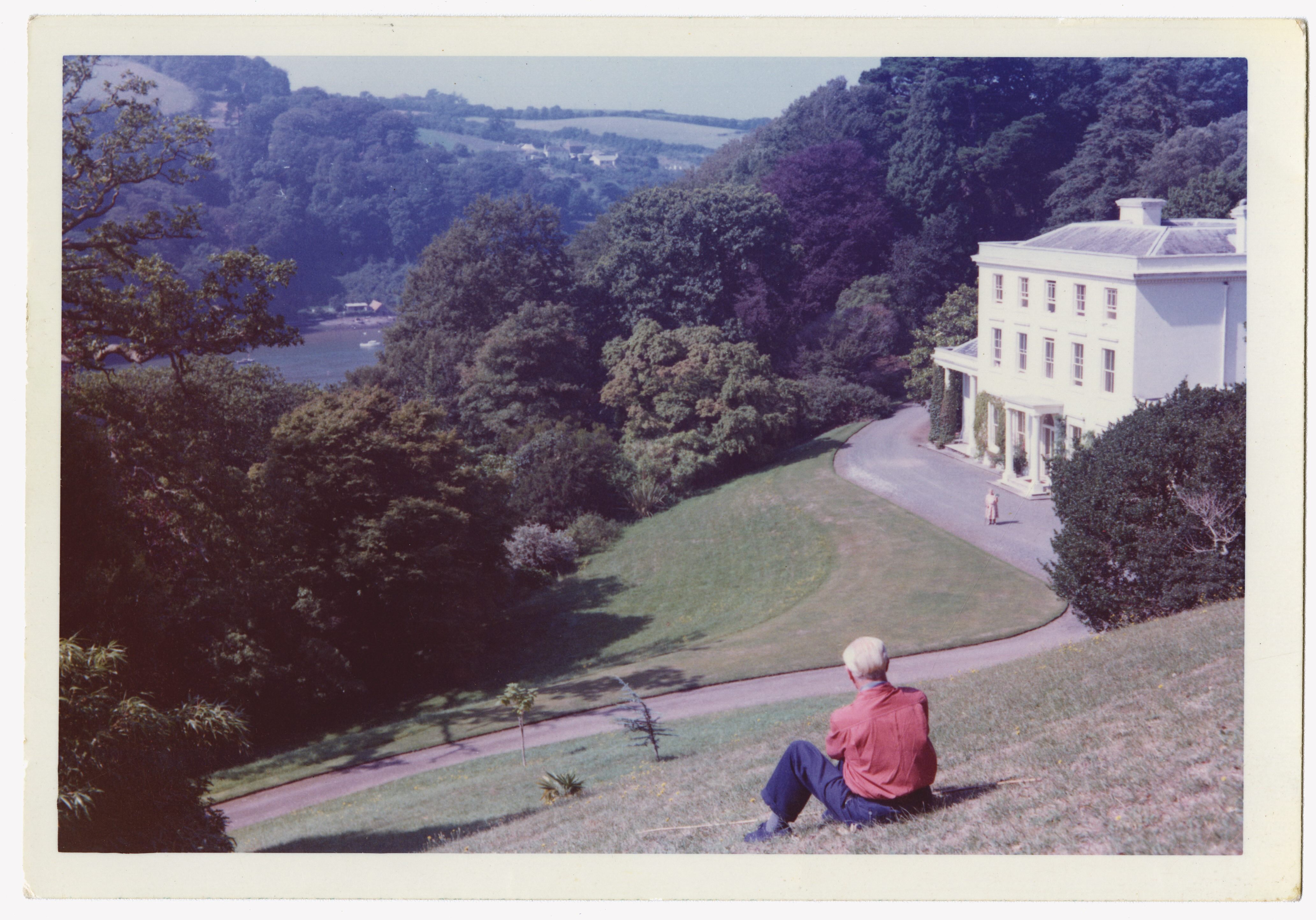
in 1964. © The Christie
Archive Trust
Thus, the Country House represents not only Christie’s favourite setting for a murder, but also her own social background as the youngest daughter of a rather well-off family at the turn of the twentieth century. Agatha Miller spent her childhood at Ashfield in Torquay, where she could roam freely, develop her imagination and write her first pieces as a teenager. But she also loved furnishing houses later in life and turning them into homes. She would go on to buy several more properties throughout her life, including Greenway, which served as a holiday home.
Next, the Dispensary represents Christie’s work with drugs and poisons at the local Red Cross hospital in Torquay, where she volunteered during the First World War, as well as her work at London’s University College Hospital during the Second World War. Her knowledge of lethal substances shows in her murder plots, where poison is often her weapon of choice.
Christie’s mysterious disappearance
Some of the items on display don’t fit neatly into the themed rooms, such as the search poster issued in 1926 when Christie mysteriously disappeared. Her car had been found abandoned after what appeared to have been an accident. Her mother had died earlier that year and her marriage to her first husband, Archibald (Archie) Christie, was breaking down. She was found eleven days later at a hotel in Harrogate, Yorkshire. But the media never quite believed her story of memory loss, and various theories circulated, suggesting that she had feigned her disappearance to take revenge on her estranged husband or to boost the sales of her novels.
Trains, trains, trains
Alongside country houses and poisons, trains feature prominently in Christie’s work, which is not surprising given how much she loved to travel. There is the 4.50 from Paddington, the Blue Train and, of course, the Orient Express. The latter inspired the room featuring the interior of a luxury train, while also evoking the real-life journeys and experiences that might have given Christie the idea for one of her most famous novels.
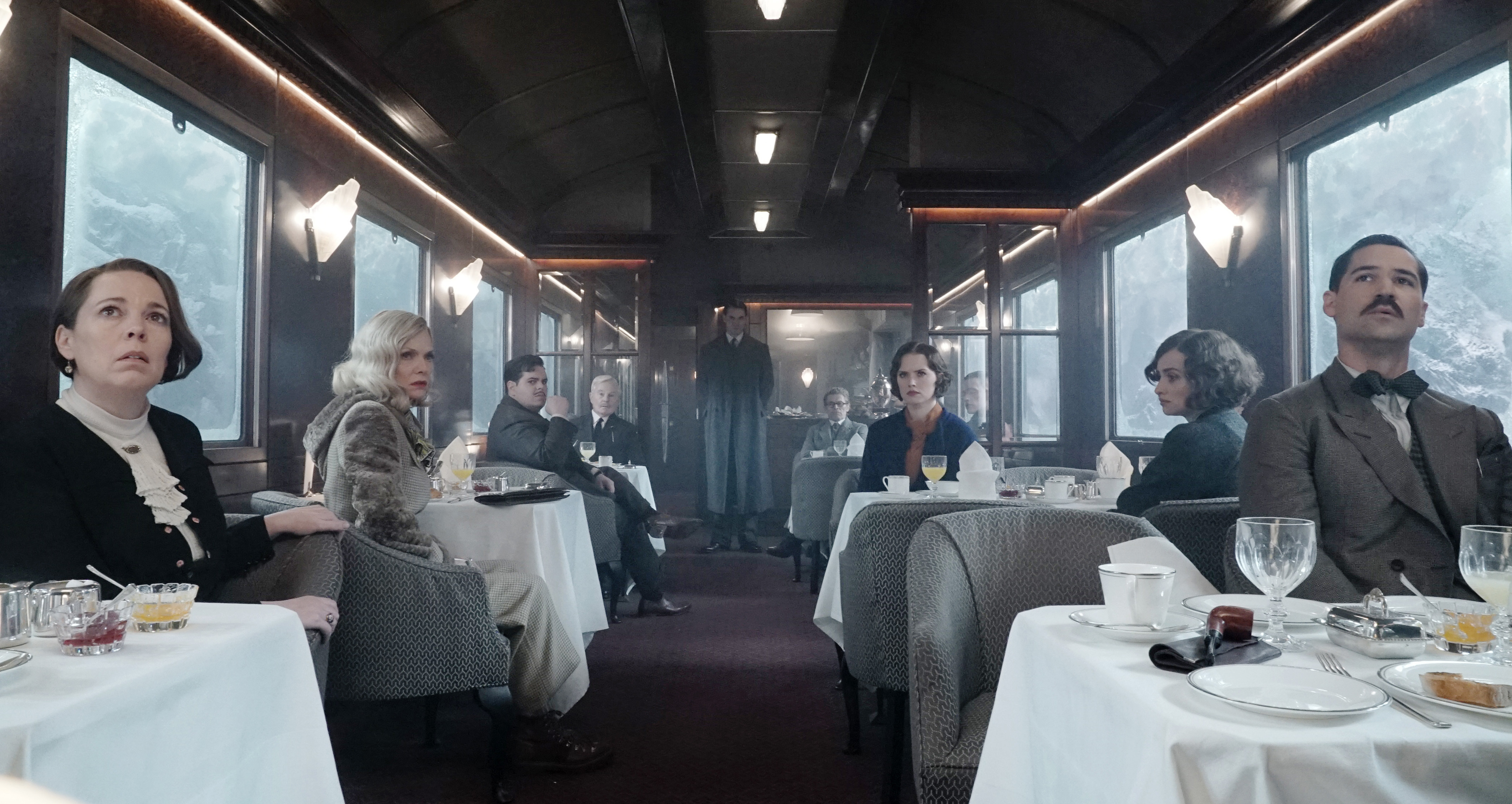
Orient Express, 2017. © 20th Century
Studios
Agatha’s love for archaeology
The Dig likewise offers insights into experiences from Christie’s life that fed into the plots of her novels. Her time accompanying her second husband, Max Mallowan, on his archaeological expeditions in the Middle East inspired books such as Murder in Mesopotamia and Appointment with Death. Her experiences of Egypt also found their way into Death on the Nile. Christie made herself useful on the archaeological sites as a photographer, cleaning artefacts and mending pottery.
Archive Trust
Christie’s presence in the Middle East also left another legacy. Her books were translated into Arabic, among other languages. For someone like me, who is interested in translation, it was particularly interesting to see the crime writer’s work adapted into a number of different languages, sometimes changing the character of the work itself. Christie’s own work also drew inspiration from other writers, such as Edgar Allan Poe and Arthur Conan Doyle, and inspired later writers in turn – not least contemporary writers of cosy crime, although I’m not so sure how she would have felt about this.
Christie’s novels shaped image of Britain around the world
Another point made by the exhibition felt very personal. Christie is often considered entry-level crime fiction for teenagers and an author for learners of English, as she wrote in an easily accessible language. Her novels have thus helped shape the image of Britain around the world. I can certainly confirm her influence on me and my love of detective fiction as well as British culture.
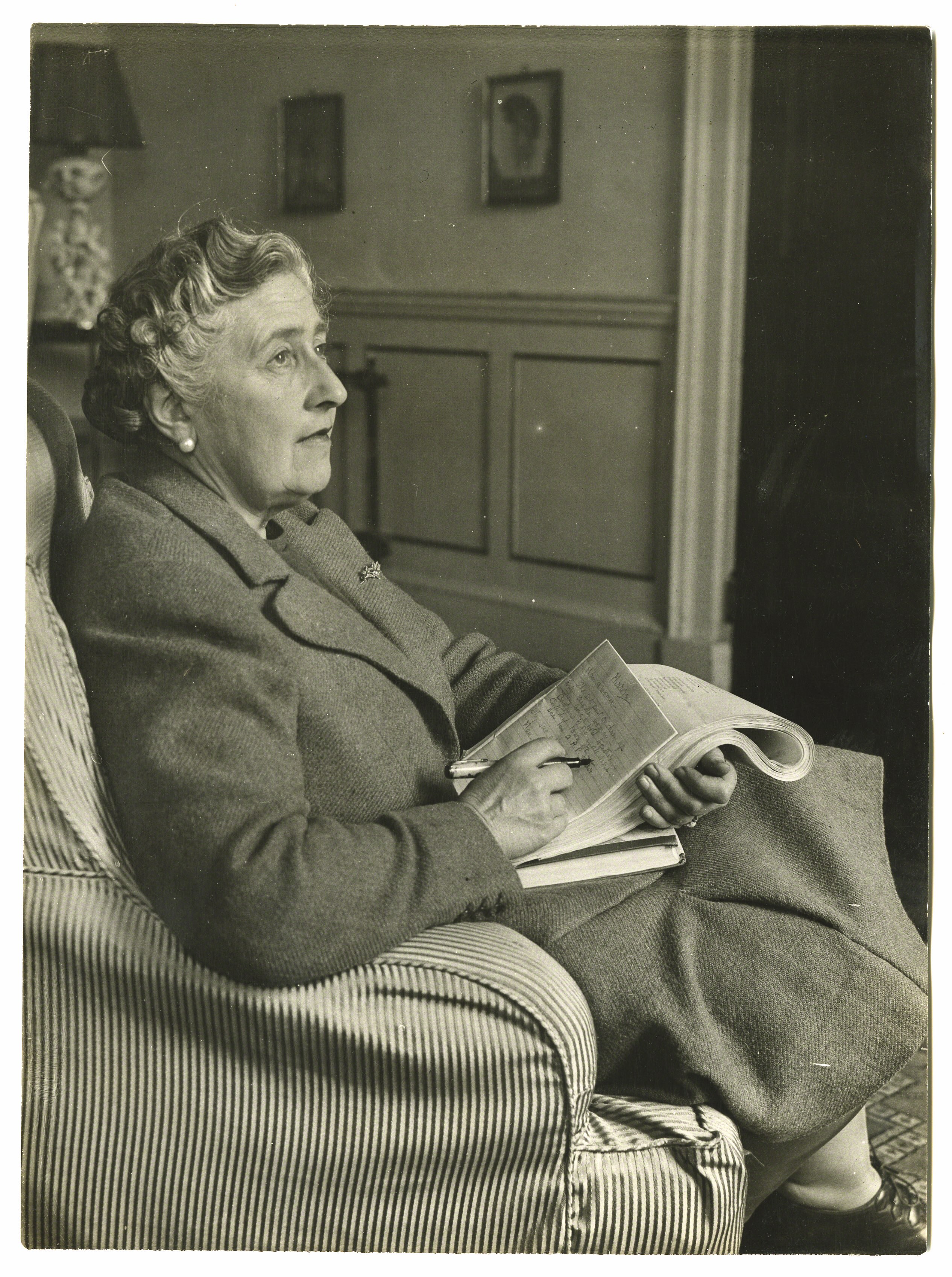
Christie, circa 1950. © The Christie
Archive Trust
But Christie was not just a novelist; she was also an acclaimed playwright. Her Witness for the Prosecution is haunting. The Mousetrap, first performed in 1952, is still running in the West End, 74 years later. Alas, I did not have much time to linger in the Theatre room. The guard was ushering us out before I was able to take it all in.
And some practical advice
One important thing to bear in mind: there is a lot to see and read. So you might want to plan some extra time if you like to read all the descriptions and occasionally look at the items on display a bit more closely. I had booked for 4 pm and found myself being ushered out of the final room two hours later, when the exhibition closed for the day.
The exhibition runs from 30 October 2026 to 20 June 2027.
gm
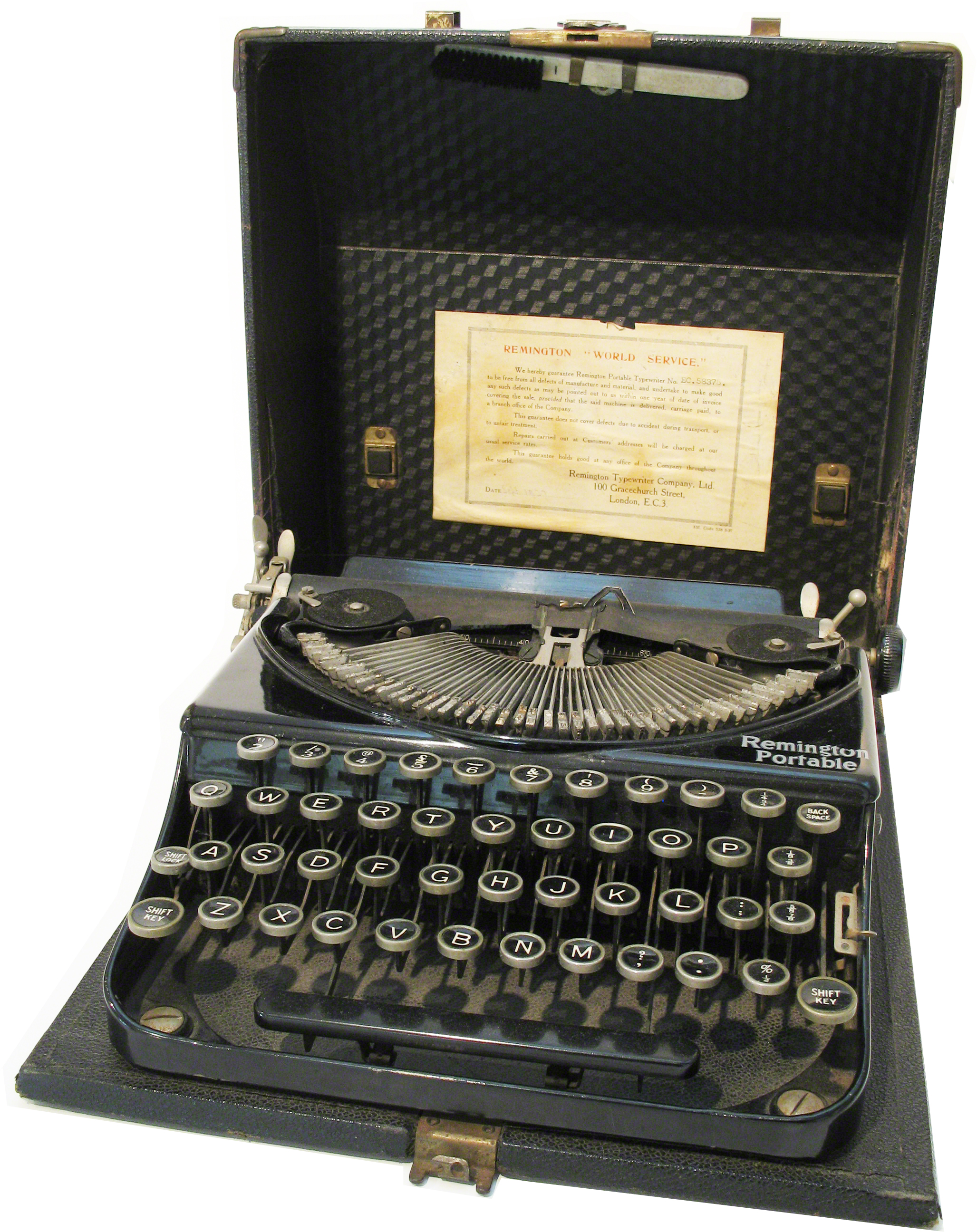
Remington typewriter
from 1937. © The Christie
Archive Trust


