I sometimes wonder if I write too many book reviews, especially academic ones. I write about two a year, so that does not seem a lot. But they are a lot of work. After all, you have to read several hundred pages of often dense academic prose to produce a review of about 1,000 words.… Continue reading Too many book reviews?
Tag: seventeenth century
Algernon Sidney in Context
I’m very pleased to see the swift progress of a collection on Algernon Sidney’s work in context I’m contributing to due to appear with Classiques Garnier later this year. It is edited by my colleagues Tom Ashby and Christopher Hamel and based on several workshops on Sidney they had organised with Gilles Olivo at the… Continue reading Algernon Sidney in Context
WS: Edmund Ludlow – The Memoirs of a Regicide in Exile
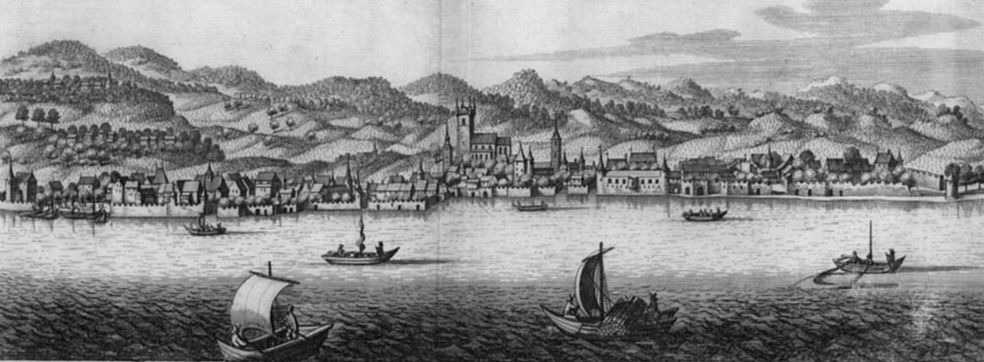
We are planning a small workshop on Edmund Ludlow’s Memoirs and his MS ‘A Voyce from the Watch Tower’ to gather ideas for a new edition of the text. You can join us at Newcastle University on 2 July – in person or via Zoom. Just get in touch.
Beyond the Old White Men: Women in English Republicanism
‘The history of old white men is on its way out’, a friend of mine and I agreed on a recent Zoom call. He is working on seventeenth-century English royalist thought, I’m working on republicanism. We’re both interested in gender issues and wondering how to make our research more inclusive and relevant. Old-white-men history should… Continue reading Beyond the Old White Men: Women in English Republicanism
How not to write women out of history
Admittedly, my headline sounds a bit dramatic. But I am serious about this. Several years ago, I reviewed two books in short succession: one, a collection of essays on Oliver Cromwell, another, a history of gender in the English Revolution. The former barely mentioned any women at all, the latter focused on gender relations during… Continue reading How not to write women out of history
Improving the Nation
In his new book, The Invention of Improvement, Paul Slack sets out to do two things: first, to trace the ‘notion of improvement’ in seventeenth-century ‘public discourse’ (vii) in England; and secondly to show how ‘the quest for improvement distinguished England from other countries.’ (1) Slack has not set himself an easy task as he… Continue reading Improving the Nation
Chasing Algernon Sidney in Kent
‘That sounds like a film’, a friend of mine responded when I told her I was off to the archive again, ‘chasing Sidney in Kent’. That’s true. In fact, I am surprised nobody ever did make a film about Algernon Sidney – or at least I am not aware of one. He clearly is the… Continue reading Chasing Algernon Sidney in Kent
The Fascination of The Isle of Pines (1668)
Henry Neville’s utopian travel narrative The Isle of Pines (1668) is one of my favourite pieces of literature. It tells the story of the shipwreck of an English trading vessel during the reign of Queen Elizabeth I and of the subsequent survival of one man and four women on a lonely island near terra Australis… Continue reading The Fascination of The Isle of Pines (1668)
Eric Nelson’s Hebrew Republic and the Importance of Jewish Sources
In his book on The Hebrew Republic, Eric Nelson sets out to refute the commonly held assumption in early modern historiography that political science came to be separated from religion over the course of the seventeenth century. Instead, he argues that the concept of the respublica Hebraeica was seen as authoritative by many political thinkers,… Continue reading Eric Nelson’s Hebrew Republic and the Importance of Jewish Sources
 The History Woman's Blog